
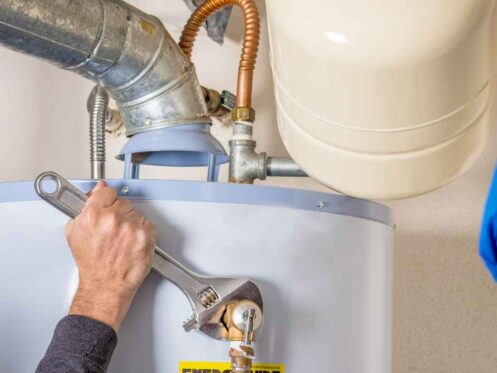
Hot water is essential for everyday activities, from showering and washing dishes to doing laundry and cleaning your home. However, Fort Myers’s mineral-rich water can challenge residential water heaters, potentially affecting efficiency, performance, and long-term reliability.
Hard water contains dissolved minerals that can accumulate inside water heaters over time. As these deposits build up, your system may struggle to heat water efficiently, develop unusual noises, or require more frequent maintenance and repairs.
In this guide, we’ll explain how hard water affects Fort Myers water heaters, the warning signs of mineral buildup, and how to decide whether repair or replacement is the better option for your home.
Why Hard Water Is a Problem for Fort Myers Water Heaters
Hard water is a common concern for homeowners throughout the Fort Myers area, though mineral concentrations vary by local water supply. Water hardness primarily refers to the amount of dissolved calcium and magnesium present in the water.
When water is heated, these minerals can form solid deposits known as scale. Over time, scale may accumulate on heating elements, heat exchangers, and other internal components, potentially interfering with normal operation.
Several factors influence how quickly mineral deposits develop:
- Water hardness: Higher mineral concentrations generally increase the potential for scale formation.
- Water temperature: Higher heating temperatures can encourage certain minerals to form deposits.
- Household water usage: More hot water use increases the amount of mineral-rich water that passes through the system.
- Maintenance history: Systems without proper cleaning or flushing may build up more deposits.
- Equipment design: Tank and tankless water heaters experience mineral buildup differently.
Hard water doesn’t necessarily mean your water heater will fail prematurely. However, understanding your home’s water quality can help you make informed maintenance decisions and spot potential problems before they get worse.
How Sediment Buildup Affects Water Heater Performance
One of the most common hard water problems involves sediment accumulating inside a traditional storage tank water heater. As minerals settle, deposits can collect near the bottom of the tank and interfere with heating performance.
In gas water heaters, sediment buildup may create a barrier between the heat source and the water. Electric water heaters can develop mineral deposits around heating elements, which can reduce heat transfer and contribute to component wear.
Sediment accumulation can create several noticeable problems:
- Reduced heating efficiency: Mineral deposits can reduce heat transfer efficiency.
- Unusual noises: Popping or rumbling sounds may occur as water heats beneath accumulated sediment.
- Longer heating times: The system may take longer to restore hot water.
- Component deterioration: Mineral buildup can contribute to additional stress on certain parts.
- Reduced hot water performance: Severe buildup may affect the system’s ability to meet household demand.
Tankless water heaters can also experience scaling, particularly inside their heat exchangers. Because these systems heat water as it flows through the equipment, mineral deposits may restrict passages and reduce heating performance.
Regular maintenance can help manage sediment and scale before they cause more serious equipment problems.
Warning Signs Your Water Heater Needs Professional Attention
Water heater problems often develop gradually, so it’s important to notice changes in performance. Some symptoms may result from normal wear, but others can indicate mineral buildup or failing components.
One common warning sign is inconsistent hot water availability. If your showers suddenly get cold or your water heater struggles to recover between uses, the system may need a professional evaluation.
Other signs include:
- Popping or rumbling noises: Sediment buildup may cause unusual sounds during heating.
- Fluctuating water temperatures: Problems with the thermostat, heating element, or other equipment may affect consistency.
- Visible leaks: Water around the unit may indicate a leak at a connection, valve, or tank.
- Discolored hot water: Rust-colored water may suggest corrosion or other plumbing concerns.
- Increasing energy costs: Decreased efficiency can increase operating expenses.
- Frequent repairs: Repeated breakdowns may indicate that the system is approaching the end of its useful life.
These symptoms don’t automatically mean you need to replace your water heater. Maintenance or repairs to individual components can fix some problems, especially when the equipment is relatively new.
However, persistent leaks, extensive corrosion, or recurring performance problems should be evaluated promptly. A qualified technician can identify the cause and recommend an appropriate solution.
When Water Heater Repair Is the Better Option
Deciding between water heater repair or replacement in Fort Myers depends on several factors, including equipment age, overall condition, repair costs, and the nature of the problem.
For relatively new water heaters, repairing a faulty component is often more economical than replacing the entire system. A professional inspection can help determine whether the issue is isolated or part of broader equipment deterioration.
Common problems that may be repairable include:
- Faulty heating elements: Electric water heaters may need replacement elements when heating performance declines.
- Thermostat problems: Malfunctioning controls can cause inconsistent water temperatures.
- Valve or connection leaks: Some external leaks can be fixed by repairing or replacing individual components.
- Manageable sediment buildup: Professional maintenance may improve performance when deposits haven’t caused permanent damage.
- Ignition or burner issues: Some gas water heater problems can be resolved by repairing components.
Repair decisions should also consider whether replacement parts are available and whether the equipment remains in otherwise good condition. A relatively inexpensive repair may provide several additional years of reliable service when the tank and major components are sound.
However, repairs should always address the underlying problem rather than temporarily masking symptoms of more extensive deterioration.
When It’s Time to Replace Your Water Heater
Traditional storage tank water heaters typically last about 8 to 12 years, though actual lifespan varies with water quality, maintenance, installation, and usage. Some systems last longer, while others develop significant problems earlier.
Age alone doesn’t automatically mean you need to replace it. However, an older water heater with frequent repairs, declining performance, or substantial corrosion may be a good candidate for replacement.
Several conditions make replacement worth considering:
- A leaking storage tank: Internal tank corrosion is generally not reliably repairable and typically requires replacement.
- Extensive corrosion: Significant deterioration may compromise important equipment components.
- Repeated expensive repairs: Ongoing service costs can make replacement more economical.
- Declining efficiency: Older equipment may consume more energy than newer, properly selected models.
- Insufficient hot water: A replacement system may better accommodate changing household needs.
When comparing options, homeowners should consider both the immediate installation expense and long-term operating costs. A newer, more efficient water heater may offer benefits, but actual savings depend on equipment type, household usage, and local utility rates.
Professional guidance can help you decide whether replacement offers better long-term value than continued repairs.
Tank vs. Tankless Water Heaters: Which Handles Hard Water Better?
Both traditional storage tank and tankless water heaters can have hard-water-related problems. However, mineral deposits affect these systems differently, so maintenance requirements matter.
Storage tank water heaters hold a supply of heated water, allowing sediment to settle and accumulate inside the tank. Regular maintenance may help remove some accumulated deposits and reduce related performance problems.
Tankless water heaters heat water as needed rather than maintaining a large stored supply. While this design offers certain efficiency and space-saving advantages, tankless heat exchangers can develop mineral scale that restricts water flow and affects heating performance.
When comparing systems, consider:
- Maintenance requirements: Storage tanks may require flushing, while tankless systems may need periodic descaling.
- Water hardness: Higher mineral concentrations can increase maintenance needs for either system.
- Hot water demand: Household size and usage patterns influence appropriate equipment capacity.
- Energy efficiency: Tankless models may offer efficiency advantages depending on usage and equipment type.
- Installation costs: Equipment selection and existing plumbing or utility connections can affect pricing.
Tankless water heaters aren’t immune to hard water damage. Homeowners considering an upgrade should discuss local water conditions and manufacturer maintenance recommendations with a qualified professional.
How to Protect Your Water Heater From Hard Water Damage
Preventative maintenance is one of the most effective ways to reduce hard water-related problems. Although you can’t always eliminate mineral deposits, proper maintenance can help preserve heating performance and catch developing concerns early.
The ideal maintenance schedule depends on your equipment type, manufacturer recommendations, water hardness, and household usage. Homes with particularly hard water may require more frequent attention.
Helpful maintenance practices include:
- Schedule professional inspections: Routine evaluations can identify sediment, corrosion, and deteriorating components.
- Follow flushing recommendations: Manufacturer-approved tank flushing may help remove accumulated sediment.
- Maintain tankless equipment: Periodic descaling can help control mineral deposits inside heat exchangers.
- Inspect the anode rod: Storage tank anode rods help protect against corrosion and may require replacement over time.
- Use appropriate temperature settings: Avoid unnecessarily high temperatures that can increase scalding risks and contribute to scale formation.
- Evaluate water quality: Testing can help determine whether water treatment may be beneficial.
Water softening equipment may help reduce scale formation by addressing hardness minerals before they enter the water heater. However, treatment recommendations should reflect actual water conditions, equipment compatibility, and manufacturer requirements.
Homeowners should avoid attempting internal water heater repairs or maintenance procedures they aren’t qualified to perform. Gas, electrical, pressure, and scalding hazards make professional service important for many water heater tasks.
Get Reliable Water Heater Service in Fort Myers With Hawkins Service Co.
Hard water can create ongoing challenges for Fort Myers homeowners, particularly when mineral deposits begin affecting water heater performance. Recognizing the warning signs and maintaining your equipment can help reduce unexpected breakdowns and unnecessary repair expenses.
Whether your water heater needs a relatively simple repair or is approaching the end of its useful life, understanding its condition is essential. A professional inspection can help determine whether maintenance, component replacement, or a new water heater is the most practical solution.
At Hawkins Service Co., we understand how important dependable hot water is to your household. Our team can evaluate water heater performance, identify potential problems, and help you explore repair and replacement options based on your home’s needs.
From sediment buildup and inconsistent water temperatures to aging equipment and recurring repairs, professional service can help restore reliable hot water. Contact Hawkins Service Co. today to schedule water heater repair, maintenance, or replacement in Fort Myers.