
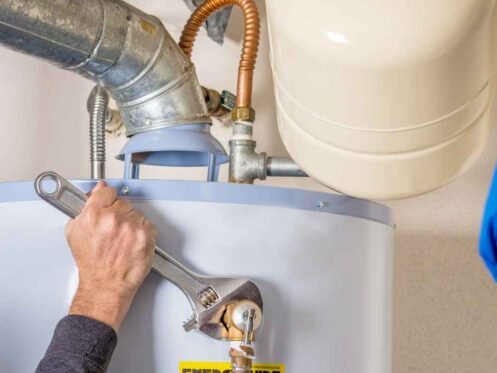
A water heater problem does not always mean you need a replacement. If the issue involves one repairable component and the tank itself is still in good condition, repair may be the smarter choice. Replacement becomes more practical when the unit is leaking, corrosion is developing, hot-water performance is declining, or repairs are becoming frequent enough that reliability is no longer there.
In this guide, you will learn how to compare water heater repair and replacement based on age, condition, repair history, leak source, performance, and long-term reliability.
Should You Repair or Replace an Older Water Heater?
Repair is usually the better choice when the problem is isolated, and the rest of the system is still healthy. Replacement deserves stronger consideration when the tank itself is deteriorating, or the heater has become increasingly unreliable.
Look at the full picture:
- Age of the unit
- Current repair estimate
- Recent repair history
- Tank condition
- Leak location
- Corrosion
- Hot-water capacity
- Energy use
- Warranty coverage
- Expected reliability after repair
One service call should not automatically push you toward replacement. The pattern matters more than a single failure.
When Is Water Heater Repair Still the Smarter Choice?
Repair can make sense when the heater has a specific problem that can be corrected without replacing the entire system.
Depending on the equipment, repairable issues may involve:
- Thermostats
- Heating elements
- Ignition components
- Valves
- Controls
- Plumbing connections
- Certain electrical components
The condition of the tank matters most. If the tank is not leaking, corrosion is limited, and the heater still provides enough hot water for the household, replacing one failed component may restore normal operation.
Warranty coverage can also change the decision. A part that would otherwise make the repair expensive may still be covered.
Ask what failed, whether other components are showing signs of wear, and how likely the system is to remain dependable after the repair. That gives you a much better basis for deciding whether the work is worth the cost.
When Does Water Heater Replacement Make More Sense?
Replacement becomes more practical when several problems begin appearing together.
Common warning signs include:
- The storage tank is leaking
- Rust or corrosion is significant
- Repairs are becoming frequent
- Hot water runs out sooner than it used to
- Temperature problems keep returning
- The system makes recurring unusual noises
- The unit has become unreliable
- Household demand has outgrown the existing capacity
The biggest distinction is between a failed component and a failing tank.
A repair can replace a bad thermostat, heating element, control, or valve. It cannot reverse internal deterioration of the tank itself.
That is why a leaking or heavily corroded tank usually changes the repair-versus-replacement calculation quickly.
How Much Should Water Heater Age Affect the Decision?
Age matters, but it should not be used as a rigid replacement deadline.
Two water heaters of the same age can be in very different condition depending on maintenance, water quality, installation, usage, and previous repairs.
An older system that has been dependable and shows no signs of tank failure may still be worth repairing. Another heater of the same age with corrosion, repeated service calls, and declining performance may be much closer to replacement.
Age becomes most useful when combined with:
- Repair history
- Tank condition
- Hot-water performance
- Corrosion
- Maintenance history
- Overall reliability
Instead of asking only how old the heater is, ask how much dependable service you are likely to get after the next repair.
Can a Leaking Water Heater Be Repaired?
Sometimes. It depends on where the leak is coming from.
Water around the heater may come from:
- Plumbing connections
- Valves
- Drain fittings
- Nearby piping
- Condensation
- The tank itself
Some external connection or valve leaks can be repaired. A leak from the storage tank is more serious because the tank itself has begun to fail.
Do not assume the tank is leaking just because there is water on the floor, but do not ignore the moisture either. Even a small leak can damage flooring, walls, cabinets, or nearby belongings.
If water is actively spreading, the source should be identified as soon as possible.
A plumber can determine whether the problem is repairable or whether the tank has reached the point where replacement is the safer option.
What Do Rusty Water, Noise, and Inconsistent Hot Water Mean?
Changes in water heater performance can provide clues about what is happening inside the system.
Common symptoms include:
- Rust-colored hot water
- Rumbling or popping noises
- Reduced hot-water capacity
- Slow recovery
- Temperature fluctuations
- Visible corrosion
- Water around the unit
- Repeated shutdowns
Rumbling or popping may be connected to sediment collecting inside a storage tank. Rust-colored hot water may point to corrosion somewhere in the hot-water system, although the tank should not automatically be blamed without inspection.
Inconsistent hot water can have several causes, including heating elements, burner or ignition problems, controls, sediment, or a unit that no longer meets the household’s demand.
One symptom alone does not always justify replacement. Several symptoms appearing together are more meaningful.
When Do Repeated Repairs Become a Reliability Problem?
This is where many homeowners struggle with the decision.
A single repair may be reasonable. Several repairs in a short period can signal that the system is entering a less dependable stage of its life.
Ask yourself:
- How many repairs has the heater needed recently?
- Are the same problems returning?
- Are different components beginning to fail?
- Has hot-water performance become less predictable?
- Would another failure create a major inconvenience?
- Is there growing concern about leaks or water damage?
An inexpensive repair may still be worthwhile if the rest of the heater is healthy. Repeated repairs on an aging, corroded system may simply delay the same replacement decision.
Reliability after the repair matters just as much as repair cost.
How Should You Compare Repair Cost With Replacement Cost?
There is no universal dollar amount that automatically makes a repair a bad choice.
The better approach is to compare what you are spending now with the value you are likely to receive afterward.
Consider:
- Current repair estimate
- Money spent on recent repairs
- Unit age
- Remaining warranty
- Tank condition
- Expected reliability after repair
- Replacement cost
- Installation modifications
- Household hot-water needs
- Efficiency of the existing system
A modest repair on a healthy system may make good financial sense.
A significant repair on an older heater with corrosion and a history of breakdowns may offer much less value.
It also helps to consider the cost of an unexpected failure. A planned replacement gives you more time to compare equipment and installation options instead of making a rushed decision after the heater fails completely.
Should You Replace Your Tank Water Heater With Another Tank or Go Tankless?
If replacement is the better choice, the next decision is what type of system fits your home.
A traditional tank water heater may remain a good option when the existing setup supports a straightforward replacement and the current hot-water capacity works well for the household.
A tankless system may be worth considering when:
- Space is limited
- Continuous hot-water capability is a priority
- Long-term efficiency matters
- The home can support the required fuel or electrical demand
- The installation requirements fit the property
Tankless is not automatically the best choice for every home. Installation can involve gas, venting, electrical, or plumbing changes depending on the system.
The best replacement is the one sized and installed around how the household actually uses hot water.
Can Maintenance Help an Older Water Heater Last Longer?
Routine maintenance can support performance and help identify problems earlier, but it cannot reverse structural deterioration.
Depending on the system, maintenance may include flushing sediment, inspecting components, checking valves, and evaluating overall condition.
Sediment buildup can contribute to noise and reduced performance, so periodic service may help the heater operate more effectively.
Maintenance is most valuable before serious deterioration develops.
If the tank is already leaking or heavily corroded, flushing or routine service will not restore it. At that point, replacement is generally the more realistic solution.
The key distinction is simple: maintenance can support reliability, but it cannot repair a failing tank.
Which Water Heater Problems Should You Address Right Away?
Some symptoms should not be postponed.
Call for professional service promptly if you notice:
- Active leaking
- Water spreading around the unit
- Strong gas odors
- Burning or electrical odors
- Significant corrosion
- Repeated shutdowns
- Sudden loss of hot water
- Rapidly worsening performance
If you smell gas, leave the immediate area and follow the appropriate emergency procedures for your utility and local authorities.
Do not attempt electrical or gas repairs unless you are qualified to perform that work.
For leaks, act quickly to limit water damage and have the source identified.
Upgrade Before Reliability Becomes an Emergency
A water heater does not need to be replaced just because it has one repairable problem. If the tank is still in good condition and the failure is isolated, repair may restore dependable service at a reasonable cost.
Replacement becomes more practical when the tank is leaking, corrosion is developing, hot-water performance is declining, or repairs are becoming frequent enough that the system can no longer be trusted.
The best decision comes from comparing the current repair with the condition of the entire heater, its recent service history, and how reliable it is likely to be afterward.
Hawkins Service Co. helps Tampa homeowners diagnose water heater problems, perform repairs when they still make sense, and evaluate replacement when reliability is declining. If your water heater is leaking, inconsistent, or requiring repeated service, contact us today to schedule a professional evaluation.