
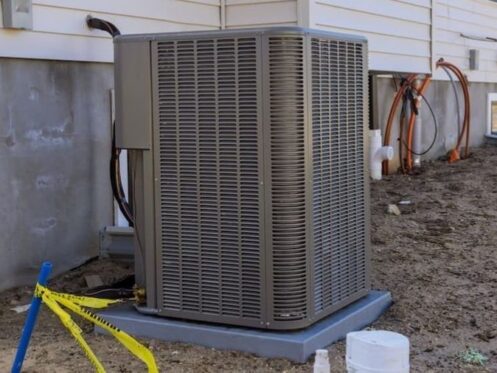
Tampa air conditioners work under demanding conditions for much of the year. High temperatures, intense sun, and persistent humidity force cooling systems to run longer and more often than equipment in milder climates. Over time, that workload can expose airflow problems, refrigerant issues, worn components, and declining efficiency.
An AC that struggles during one unusually hot afternoon may not need replacement. However, a system that constantly runs, leaves rooms warm, fails to control humidity, or requires repeated repairs may be approaching the end of its useful life.
In this guide, we will explain why your AC may not be keeping up with Tampa heat and humidity, when professional repair may restore performance, and when replacement may be the better long-term decision.
Why Tampa Weather Is So Hard on Air Conditioners
Tampa’s cooling season is long, hot, and humid. Even outside the peak summer months, an air conditioner may still need to run regularly to maintain a comfortable indoor temperature.
Several conditions increase system strain:
- High daytime temperatures
- Warm and humid nights
- Strong sunlight through windows
- Hot attic spaces
- Long cooling cycles
- Frequent thermostat adjustments
- Heavy moisture removal demands
- Limited breaks between cooling seasons
An air conditioner must remove both heat and moisture from the home. During humid weather, the system may run longer because it is not only lowering the temperature. It is also collecting moisture on the evaporator coil and draining it away.
This ongoing workload can accelerate wear on capacitors, motors, compressors, electrical connections, and other components.
What It Means When Your AC Cannot Keep Up
An AC may take longer to reach the thermostat setting during extreme heat. That does not always mean the equipment is failing.
The problem becomes more concerning when the system consistently cannot maintain comfort, even overnight or during less intense weather. Your AC may be struggling if the thermostat is set to 74 degrees but the indoor temperature remains several degrees higher for hours.
Poor performance can also appear as:
- Warm bedrooms or upper floors
- Weak airflow from vents
- Sticky or clammy indoor air
- Long cooling cycles
- Frequent starts and stops
- High energy use
- Uneven temperatures between rooms
These symptoms may come from a repairable problem, an inefficient home, incorrect system sizing, or an aging air conditioner that has lost capacity.
Signs Your Cooling System Is Struggling
Cooling problems often begin gradually. Homeowners may lower the thermostat or run ceiling fans more frequently before realizing the AC itself is underperforming.
Warning signs include:
- The AC runs almost constantly
- The thermostat setting is rarely reached
- Air from the vents feels weak or only slightly cool
- Some rooms remain much warmer than others
- Indoor humidity stays high
- The system turns on and off every few minutes
- Energy bills rise without a major rate or usage change
- Water collects near the indoor unit
- Ice forms on refrigerant lines
- The system makes buzzing, rattling, or hissing sounds
- Repairs are becoming more frequent
A technician can determine whether the issue involves routine maintenance, a failed part, ductwork, refrigerant, or broader system decline.
Dirty Filters and Restricted Airflow
A clogged air filter can significantly reduce cooling performance. When the system cannot pull enough air through the return, less air moves across the evaporator coil and into the home.
Restricted airflow can cause:
- Weak air from supply vents
- Long run times
- Frozen coils
- Uneven cooling
- Higher energy use
- Additional blower motor strain
Closed vents, blocked returns, dirty coils, and damaged ductwork can create similar symptoms.
Replacing a dirty filter may improve performance, but it may not solve the entire problem if the coil has already frozen or a motor has been damaged. If airflow remains weak after installing a clean filter, cooling repair may be necessary.
Dirty or Frozen Evaporator Coils
The evaporator coil absorbs heat from indoor air and removes moisture during the cooling cycle. Dirt buildup creates a barrier that makes both processes less effective.
The coil may also freeze when airflow is too low or refrigerant pressure is incorrect. Once covered in ice, it cannot absorb heat properly.
Signs of a frozen or dirty coil include:
- Ice on the indoor unit or refrigerant line
- Warm air from vents
- Weak airflow
- Water near the air handler
- Long cooling cycles
- Poor humidity control
Turning the thermostat lower will not fix a frozen coil. The system should be inspected to determine whether the cause is restricted airflow, low refrigerant, a blower issue, or another mechanical problem.
Low Refrigerant and Refrigerant Leaks
Refrigerant is essential for moving heat from inside the home to the outdoors. It circulates through a sealed system and does not normally need to be refilled.
If refrigerant is low, there is usually a leak.
Possible symptoms include:
- Warm or inconsistent cooling
- Long run times
- Ice buildup
- Hissing or bubbling sounds
- Higher utility bills
- Reduced humidity removal
Adding refrigerant without locating the leak may only provide a temporary solution. Depending on the leak location, system age, refrigerant type, and repair cost, a technician may recommend either repair or replacement.
Continuing to operate a system with low refrigerant can place additional stress on the compressor, one of the most expensive AC components.
Leaky Ductwork and Heat Gain
Your air conditioner may be operating correctly while cooled air escapes before reaching the rooms.
Duct leaks can release conditioned air into the attic, walls, garage, or crawl space. Return duct leaks may pull hot, humid air into the system.
Other sources of heat gain include:
- Poor attic insulation
- Air leaks around windows and doors
- Unsealed attic access points
- Direct afternoon sun
- Damaged weatherstripping
- Poorly insulated ductwork
These problems can make the AC appear too small or ineffective. Sealing ducts and reducing heat gain may improve comfort without replacing the cooling system.
Poor Humidity Removal
A Tampa home can feel uncomfortable even when the thermostat is close to the selected temperature. High indoor humidity makes the air feel warmer and can contribute to musty odors, condensation, and moisture problems.
Poor dehumidification may be caused by:
- An oversized air conditioner
- Short cooling cycles
- Dirty evaporator coils
- Low refrigerant
- Incorrect blower settings
- Continuous fan operation
- Clogged condensate drainage
- Outdoor air entering the home
An oversized AC can cool the house quickly but shut off before enough moisture is removed. This can leave the home cold and clammy rather than comfortably cool.
When AC Repair May Restore Performance
Repair is often worthwhile when the system is in otherwise good condition, and the failure involves a specific component.
Common repairable problems include:
- Failed capacitors
- Clogged drain lines
- Dirty coils
- Faulty thermostats
- Minor electrical issues
- Blower motor problems
- Damaged contactors
- Repairable refrigerant leaks
- Loose wiring
- Blocked airflow
The decision should consider system age, repair history, warranty coverage, and overall condition. A single failure in a relatively efficient system is different from another major repair on equipment that has already become unreliable.
Signs Repair May No Longer Be Enough
At some point, repeated repairs stop providing good long-term value. A technician may still be able to replace another part, but that does not mean repair is the best decision.
Replacement may deserve serious consideration when:
- The system is near or beyond its expected service life
- Repairs are needed every season
- A major component has failed
- The compressor is damaged
- The system uses an older refrigerant that is costly to obtain
- Energy bills continue to rise
- Indoor comfort remains poor after repairs
- Humidity control is consistently inadequate
- The AC is heavily corroded
- Replacement parts are difficult to find
- The system is incorrectly sized for the home
A repair that restores operation for only a short period may delay the inevitable while adding to the total cost.
How System Age Affects the Repair Decision
Air conditioners lose efficiency and reliability as components wear. Age alone does not determine whether replacement is necessary, but it changes how much financial sense a major repair makes.
An older unit may have:
- Worn electrical components
- Reduced compressor performance
- Corroded coils
- Outdated efficiency ratings
- Limited parts availability
- Previous refrigerant leaks
- Existing airflow problems
- No remaining warranty coverage
If a major repair costs a significant amount and the rest of the system is also deteriorating, replacement may be the more practical investment.
Compare Repair Cost With Remaining System Value
There is no single formula that works for every homeowner. Instead, evaluate the repair in the context of the system’s remaining value.
Ask:
- How old is the air conditioner?
- How many repairs has it needed recently?
- Is the current repair covered by warranty?
- Is this an isolated failure or part of a pattern?
- How efficiently does the system operate?
- Does it still control temperature and humidity well?
- Are major components showing wear?
- How long is the repair expected to last?
A low-cost repair on a dependable system may be an easy decision. A costly compressor or coil repair on an older, inefficient unit may be harder to justify.
Why Correct AC Sizing Matters in Tampa
Proper system sizing is essential for both cooling and humidity control.
An undersized AC may run continuously and still fail to reach the thermostat setting. An oversized unit may cool too quickly, short cycle, and leave excess moisture in the air.
Correct sizing should account for:
- Square footage
- Ceiling height
- Insulation
- Window size and orientation
- Sun exposure
- Home layout
- Air leakage
- Duct condition
- Number of occupants
- Tampa’s local climate
A professional load calculation provides a more accurate recommendation than simply replacing the old unit with equipment of the same size.
Benefits of Replacing an Overworked Cooling System
A properly selected replacement system may provide:
- More consistent indoor temperatures
- Better humidity control
- Lower energy use
- Quieter operation
- Stronger and more balanced airflow
- Fewer unexpected repairs
- Improved thermostat control
- Better compatibility with indoor air quality equipment
Replacement also creates an opportunity to address duct problems, equipment sizing, insulation concerns, and other issues that may have limited the old system’s performance.
Questions to Ask Before Approving Another Repair
Before investing in another repair, ask your HVAC technician:
- What caused the current failure?
- How old is the system?
- Are other major parts showing wear?
- Is the repair covered by warranty?
- How long should the repair last?
- Is the AC properly sized?
- Would replacement improve humidity control?
- How does current efficiency compare with newer equipment?
- Are financing options available?
- What replacement options fit the home?
A clear diagnosis and honest comparison can help you make a decision based on comfort, reliability, and long-term cost.
Know When to Repair or Replace Your Tampa AC
An air conditioner that cannot keep up with Tampa heat and humidity may have a dirty coil, low refrigerant, restricted airflow, duct leakage, or another repairable problem. However, advanced age, recurring failures, major component damage, and persistent comfort issues may mean repair is no longer enough.
Hawkins Service Co. can inspect your cooling system, identify the cause of poor performance, and explain whether repair or replacement offers the better value. If your AC is running constantly, leaving your home humid, or requiring repeated service, contact us today to schedule an evaluation.